
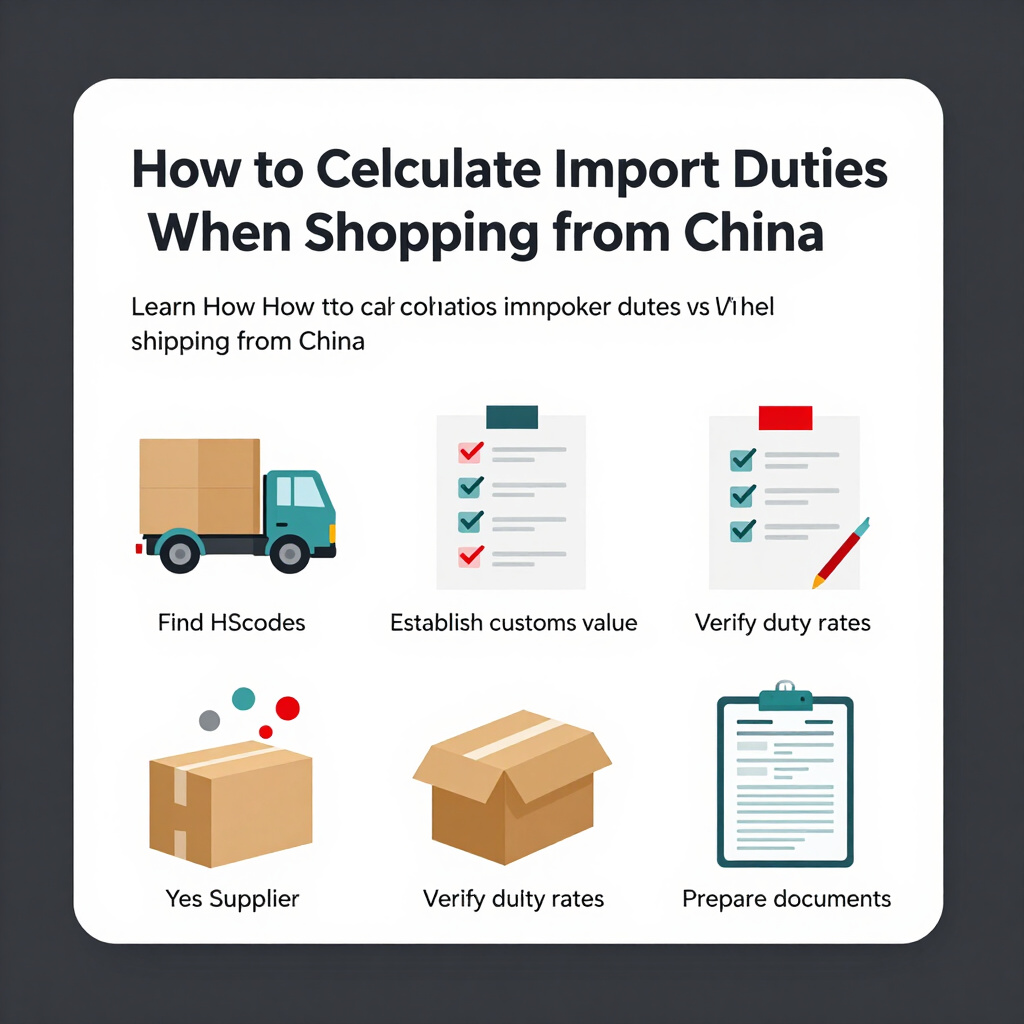
What goes into an import duty calculation?
To calculate import duties when shipping from China, you need the HS code for your product, the customs value of the shipment, the duty rate that applies in your destination country, and the documents customs will ask for. The exact calculation method depends on where you are shipping to, so verify the current rules with your national customs authority or a licensed customs broker before you ship.
Getting this right affects your pricing and your delivery timeline. Yes Supplier can help with sourcing and logistics coordination, but the duty calculation itself is your responsibility as the importer.
What are import duties and how do they work?
Customs authorities can charge duties when goods enter a country. The rate and the way it is calculated depend on the destination country and the product. Those rules change, so the official government source for your country is the only reliable reference. A licensed customs broker can also help.
When you import, you will need to provide information about your product, its value, and its origin. Customs uses that information in its review. For general questions about importing, check the frequently asked questions on Yes Supplier’s website.
Step 1: Find the HS code for your product
Start with the HS code. Customs uses it to classify your product and decide which rate applies. Your supplier can often tell you the code they use, but that code is not binding. Confirm it with your customs authority or a licensed customs broker before shipping.
Classification gets complicated when a product has multiple components or can be used in different ways. If you are not sure, professional help is worth it. Yes Supplier’s services include product development support, which can help while you are still defining the product.
Step 2: Work out the customs value
Next, establish the customs value. This is the figure customs uses to assess the duty. Each country has its own rules for what counts in that value. Keep the commercial invoice, payment records, and freight charges so you can support the number you declare.
If you are not sure what to include, ask your customs authority or a licensed customs broker. Yes Supplier’s how the process works page explains how they manage order documentation and logistics coordination.
Step 3: Look up the duty rate
With the classification and value in hand, you can find the duty rate that applies to your shipment. Rates are set by the destination country and they change. The official tariff schedule published by your customs authority is the best source for current rates.
If you cannot find the rate or are not sure how to interpret it, a licensed customs broker can help. For general customs and logistics questions, the customs and logistics questions on Yes Supplier’s FAQ page may provide useful guidance.
Step 4: Confirm the calculation method for your destination
The calculation method is not the same everywhere. Duty rates and valuation rules vary by country. Your destination country’s customs authority may publish a calculator or worked examples. Use that official guidance, or ask a licensed customs broker to walk you through it.
For more on logistics coordination, read this related logistics article.
Step 5: Prepare the required documentation
Customs clearance runs on paperwork. The exact documents depend on the destination country and the type of shipment. Common examples may include a commercial invoice, packing list, and transport documents. Your supplier, freight forwarder, or customs broker can tell you what is required for your specific shipment.
Make sure the information in your documents is consistent. Yes Supplier’s logistics coordination service helps manage documentation and communication with freight forwarders.
Where importers usually trip up
The most common mistake is relying on outdated or incorrect information. Customs rules and rates change, and a rate that applied last year may not apply now. Always confirm the current requirements for your shipment with official sources or a licensed customs broker.
Work with your supplier and customs broker to confirm your product classification, declared value, and documentation before shipping. That verification step is part of the import process, not an optional extra.
How Yes Supplier can help
Yes Supplier offers requirement confirmation, supplier search and vetting, sample coordination, production monitoring, final inspection, product development support, and logistics coordination. These services cover many parts of the sourcing and import process, but they do not replace the importer’s responsibility to verify customs rules.
To learn more about their services and how it works, visit their website.
Frequently asked questions
How are import duties calculated?
The calculation method depends on the rules of the country you are shipping to. You will need to provide information about your product, its value, and its origin. For the exact method, check your customs authority’s official guidance or ask a licensed customs broker.
What is an HS code and how do I find it?
An HS code is a product classification code used in international trade. Your supplier may provide the code they use, but you should verify it with your customs authority or a licensed customs broker.
What is the customs value basis?
The customs value is the value used by customs authorities to assess duties. The rules for determining it vary by country. Keep documents such as the commercial invoice and payment records to support the value you declare.
Where can I find official duty rates?
Your national customs authority is the best source for current duty rates. You can also ask a licensed customs broker for help finding the rate that applies to your shipment.
What documents are needed for customs clearance?
The required documents depend on the destination country and the shipment type. Your supplier, freight forwarder, or customs broker can confirm what you need. Common examples may include a commercial invoice, packing list, and transport documents. For more details, visit the FAQ page.
Before you ship your next order from China, confirm the HS code with official sources, determine the customs value according to your destination country’s rules, verify the applicable duty rate with your customs authority or a licensed customs broker, and prepare all required documentation with consistent information. If you have any doubts, consult a licensed customs broker. If you need help with sourcing, supplier vetting, or logistics coordination, Yes Supplier is here to support you. Learn more about Yes Supplier and review their case studies.