
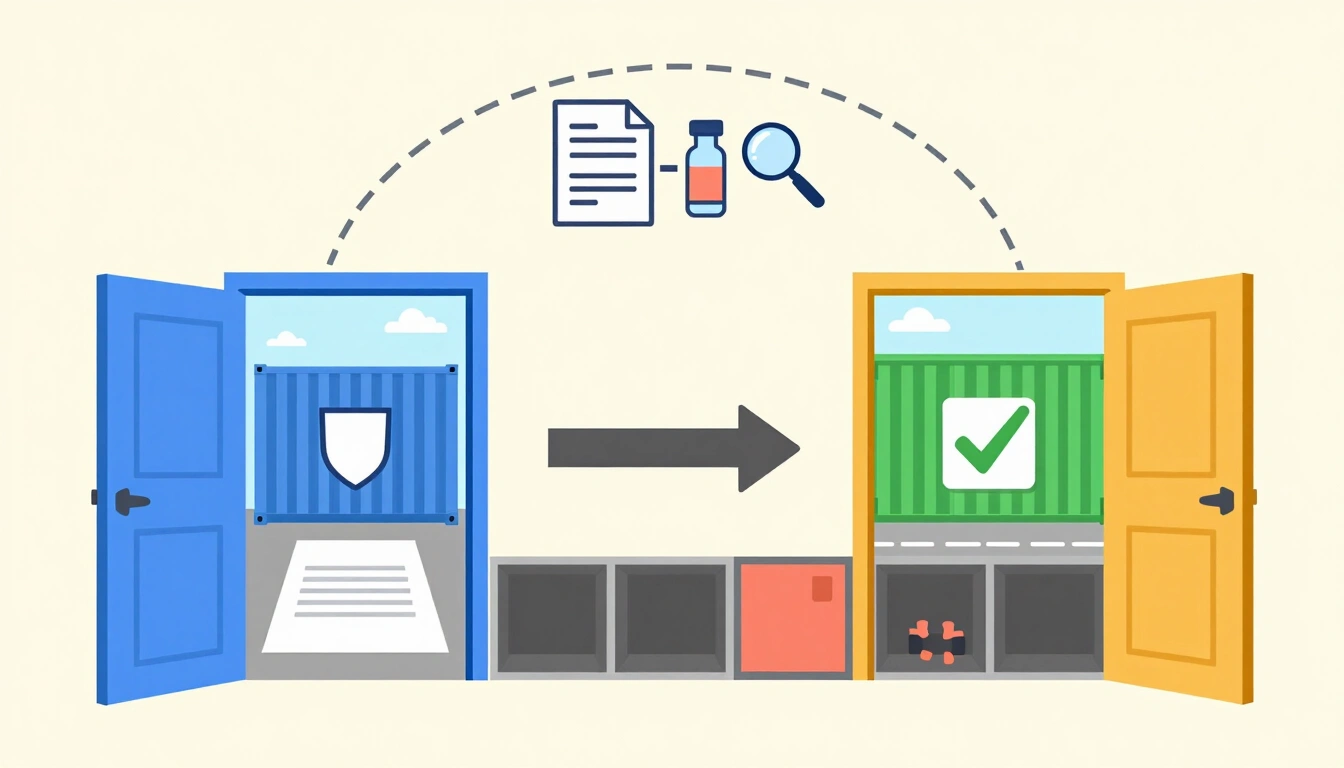
1688 and Alibaba look like the same company selling the same goods, and in a narrow sense that is true: both are wholesale marketplaces from the Alibaba Group, and both connect buyers with Chinese factories and trading companies. In every practical sense, they are different machines for different buyers. Alibaba.com points outward, at importers who come from outside China. 1688.com points inward, at buyers who operate inside China.
If you are an ecommerce brand or product designer sourcing from China, the natural impulse is to search both and compare prices. That comparison will mislead you unless you understand what the quoted price on each platform includes, who the supplier is used to selling to, and who is going to move the goods to your door. The lower-looking price is not necessarily the better deal; it is often the domestic price for a transaction that has not been turned into an export one yet.
What Alibaba.com is actually for
Alibaba.com is the international face of the group’s wholesale business. Suppliers there generally expect foreign buyers. They communicate in English, at least at export level, and they understand the basic grammar of export trade: price terms such as FOB and EXW, export packing, commercial invoices, and freight arranged by the buyer or the seller. Many also take part in Alibaba.com’s Trade Assurance program, a payment protection layer available on qualifying transactions.
That does not mean buying there is effortless. The supplier still needs to be checked, the sample still needs to be tested, and the goods still need to be inspected before shipment. What it means is that the buyer’s job is a normal importing job: negotiate terms, manage the order, arrange freight, clear customs. The listing gives you a starting point, not a finished supply chain.
What 1688.com is actually for
1688.com is the domestic Chinese wholesale platform. It exists so that buyers inside China – ecommerce sellers, shop owners, small traders, even other factories – can buy stock in RMB, pay through domestic channels such as Alipay, and receive the goods through domestic logistics. The interface is Chinese, the communication happens in Chinese, and the prices are domestic prices.
Read that last line carefully, because it is the heart of the difference. A domestic price on 1688 does not usually include export packing, export documentation, international freight, or the handling that a cross-border order needs. The quote assumes the goods are staying in China. Foreign buyers can still use 1688, but only by adding a layer inside China: a freight forwarder who can buy on your behalf, a local agent, or a sourcing service that consolidates and exports the goods properly.
There is also an honest reason to look at 1688 even if you never buy there. It shows you a domestic baseline for what a product costs before export costs and exporter margins get added. Experienced sourcers use that baseline as a negotiation reference, not as a price you can actually expect to land in your warehouse.
The direct comparison
The table below maps the differences a buyer will hit, from the opening message to final delivery.
| Aspect | Alibaba.com | 1688.com |
|---|---|---|
| Who it serves | Global importers and foreign businesses | Domestic Chinese buyers: shops, traders, ecommerce sellers, factories |
| Language and interface | English-first, built for international trade | Chinese-language, built for the domestic market |
| Supplier expectations | Suppliers are used to export buyers: English communication, price terms, export packing | Suppliers are used to domestic buyers: Chinese communication, RMB payment, delivery inside China |
| What the quoted price assumes | An export-oriented quote that can be given to a foreign buyer, with freight and duties separate | A domestic price; export packing, documents, and freight are usually not included |
| Order sizes and MOQs | MOQs set with export orders in mind | MOQs set with domestic order volumes in mind |
| Payment | International payment methods, plus buyer protection such as Trade Assurance on qualifying orders | Domestic payment channels such as Alipay; international cards are generally not the default |
| Logistics | Sea or air freight arranged by buyer or supplier under the agreed price terms | Domestic delivery inside China; international freight needs a forwarder or agent on your side |
| Export documentation | Suppliers are generally set up to issue the commercial documents a customs clearance needs | Confirm at quoting stage; a domestic quote often excludes export documents |
| Disputes and protection | Cross-border processes designed for international buyers | Domestic processes in Chinese, harder for a foreign buyer to use directly |
Notice what is not in the table: supplier names, prices, or quality guarantees. Neither platform guarantees quality. Both are directories of businesses, some excellent and some not, and the screening work stays the same whether the listing sits on the English side or the Chinese side.
Match the marketplace to the buyer you are
If you are new to importing and nobody in your supply chain works from China, Alibaba.com is the more practical starting point. You can communicate in English, transact through payment routes designed for cross-border trade, and the suppliers who list there can walk you through export packing and documentation. The learning curve is smaller.
The picture changes when an agent or freight forwarder already works for you in China. 1688 becomes far more useful: you can see the domestic price, sample through your agent, and work with a supplier that may never have exported before, because the export work happens on your side of the transaction. This setup takes more coordination and more trust in the person on the ground.
For a product you already source, the useful exercise is not 1688 versus Alibaba. It is comparing like for like: the same product specification, the same sample, the same quantity, the same export terms. A domestic quote and an export quote are different products financially until you add the missing costs.
What no platform will show you
Some parts of the deal live outside the listing, starting with communication. On Alibaba.com, English is the working language; on 1688, it is Chinese. Whichever platform you use, the only version of your product that matters is the version written down: a specification sheet with materials, dimensions, colors, packaging, and tolerances. The more translation sits between you and the factory, the more your spec sheet and samples matter.
The sample is the real contract. No photo, video call, or certificate replaces a physical sample made to the exact production specification and checked by someone who can measure it. The same goes for inspection: an independent pre-shipment inspection is the normal way to confirm quantity, packaging, and basic quality before goods leave the factory.
The hidden cost is the distance between a domestic price and a landed price. Export packing, documents, freight, and duties are all real, and on 1688 they are all your problem unless someone in China handles them for you. A useful habit is to write the whole landed-cost chain on paper before comparing offers.
Whichever platform you choose, hold every supplier to the same short list: a business registration that can be checked, direct contact with the person who makes the goods, a sample that matches the production spec, an independent inspection before shipment, and an explicit answer about who clears customs and who pays the duties.
Customs and duties belong to your country, not the platform
Neither marketplace controls what happens when the goods cross your border. Customs duties, import taxes, product certification, and labeling rules are set by the country you are importing into. In the United States, U.S. Customs and Border Protection administers import entry requirements and expects the importer to meet them; the agency’s basic import-export guidance is the official reference for what a buyer must do. In any market, the platform does not set your duty rate. Your local customs authority does, and somebody has to act as importer of record on the entry – usually you, unless the deal is arranged otherwise.
That is why supplier verification matters beyond the listing. A factory can make a good, honest product and still ship something that does not comply with the rules of your market. Compliance checks, material certifications, and labeling are the buyer’s job. Build that verification into the timeline, not as an afterthought.
The practical truth
Alibaba.com is the easier door for buyers who stand outside China. 1688 is the cheaper-looking door that opens only when you have somebody on the inside. Both can lead you to real factories, and both can waste your money if you skip verification. Choose the door that matches the way you actually buy, then hold the supplier to samples, specifications, and inspection. If the coordination is more than your team wants to own, that is the kind of requirement a sourcing service is built for: Yes Supplier’s services cover supplier search and vetting, sample coordination, production monitoring, final inspection, and logistics coordination. You can read the how-it-works overview before deciding how much of the process to keep in-house.