
You have two sourcing tabs open. One is Global Sources, the other Alibaba.com, and both show suppliers that look ready to take your order. There are photos of workshops, badges for verified members, and chat windows with quick replies. The search experience is almost identical. The difference appears later, when you ask whether the company behind the listing can actually build your product, hold your tolerances, and ship on the date you agreed.
What Global Sources gives a small buyer
Global Sources grew out of live export trade events. That origin still shapes the kind of supplier you find there. Many companies listing on the platform are used to standing next to their product and answering technical questions from buyers who know what they are asking. For a product designer or a hardware startup, that environment saves time.
You can compare manufacturing approaches by walking a booth line, inspect product details up close, and speak with someone who can explain how a component is made rather than simply forward a sales sheet. If you already have engineering drawings, this is useful. You need a supplier who can discuss materials, tooling, tolerances, and lead time. Global Sources gives you a venue where those conversations are possible.
That does not make Global Sources automatically better. Trade events reward presentation. A clean booth and a printed product catalog tell you little about how the factory will behave when the batch runs late or a component fails inspection. If your product is simple and well understood, a live event environment may not be worth the travel or the time you would spend sorting through exhibitors.
The useful part of Global Sources is not the badge; it is the chance to ask questions that cannot fit into an online form.
What Alibaba.com gives a small buyer
Alibaba.com gives a small buyer a wider catalog and a low-friction way to compare product concepts. Many entrepreneurs and ecommerce startups start there because they can test an idea before they fully understand their own supply chain. You can search by product, see multiple price tiers, and send messages to several suppliers in an afternoon.
The tradeoff is filtering. A larger catalog means more resellers, more language friction, and more listings that look similar even when the factories behind them are not similar. Fast chat replies are convenient, but speed cannot replace checking who you are dealing with. A supplier who answers quickly may still have no production line, while a slower reply may come from a factory that is actually busy making goods for someone else.
If you are still shaping your product, the broad catalog helps you map what is possible and what it might cost to make. If you are ready to commit to a specific design, the same catalog creates noise. You will spend more time filtering and less time evaluating.
Verification is where platform listings fall short
Marketplace badges, membership status, and supplier reports are clues, not proof. They can show that a company paid for a service, submitted a document, or completed a verification call. They cannot show how the factory will behave on a production run, whether it will switch materials after you approve a sample, or whether it will ship a product different from the one you inspected.
Your pre-order process should include a sample that matches your specification, a written agreement about defects and delays, and a practical way to inspect before shipment. Certification requirements change with your target market and product category, so confirm them with the supplier and with whoever regulates imports in your country. The platform will not protect you from a customs issue.
Think of the platform as a lead source, not a quality system. It helps you find suppliers; it does not replace the work of qualifying them. Verification is not a one-time event. A supplier profile can look current even when the production line behind it has changed. That is why the written agreement and the inspection plan matter more than any badge.
Use a scorecard, not a hunch
Before you send a purchase order, run through a short scorecard. If you cannot answer these questions, more work remains no matter which marketplace you picked.
| Check | Why it matters |
|---|---|
| Business registration appears on supplier documents | Helps confirm you are dealing with the entity that signs the contract. |
| Factory address matches the location on the listing | A trading office can be a legitimate supplier, but you should know you are not buying directly from the factory. |
| Sample passes your specification and packaging requirement | A sample is the minimum check, not a guarantee for the full production run. |
| Certification documents match your destination market | An export certificate that works in some markets can be meaningless in yours. |
| Independent inspection is possible before shipment | Problems found before the container ships are cheaper to resolve. |
| Defects and delays are described in writing | A supplier who avoids this question is a warning sign. |
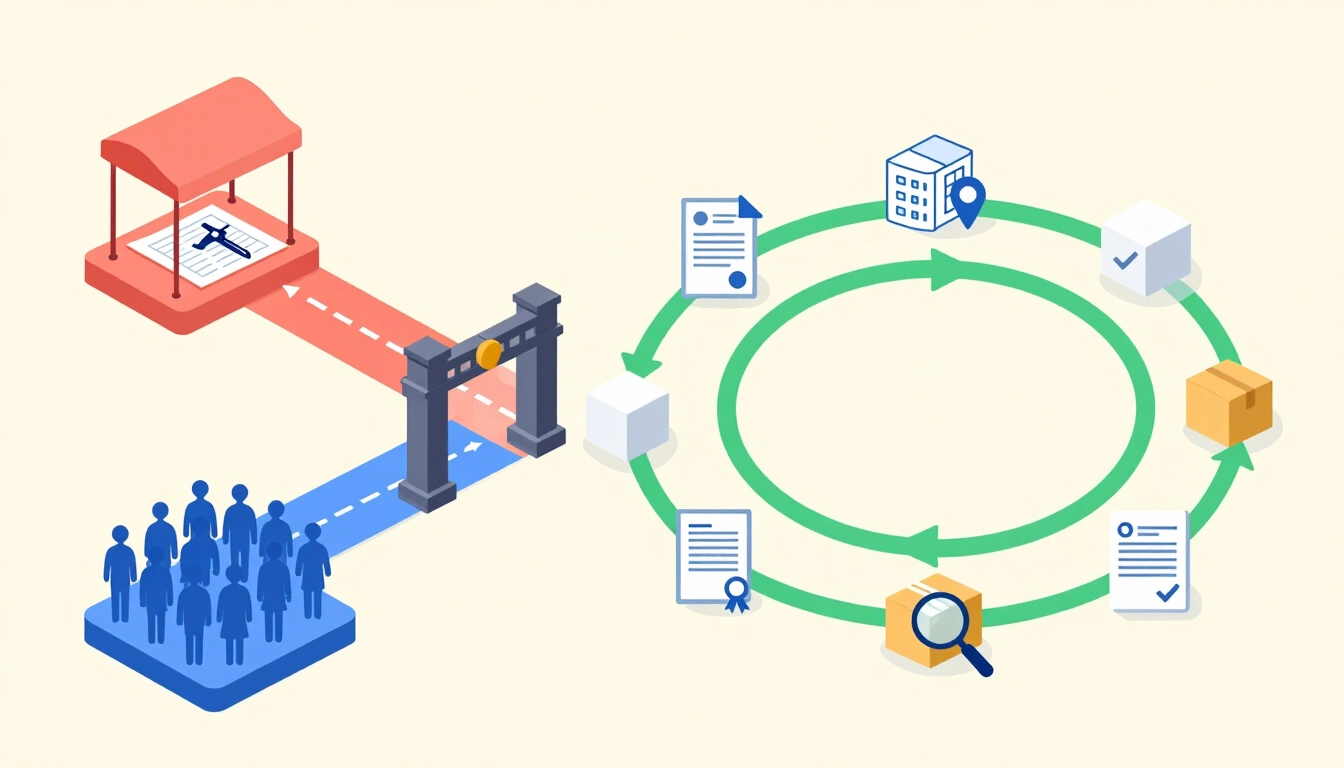
Work through the checks in order. Business registration tells you which entity you are dealing with. The factory address tells you whether you are buying direct or through a trading office. A sample tells you whether the supplier can meet your specification. Certification documents tell you whether the product will clear your destination market. An inspection tells you whether the finished goods match what you approved. A written policy on defects and delays tells you what to do when something goes wrong.
A supplier who avoids the written agreement is a warning sign. A sample that substitutes components is also a warning sign. The scorecard is not a guarantee, but it will make the remaining risk visible.
Compare factories, not listings
Before you start messaging suppliers, write down your product specification, target volume, target price, certification needs, packaging requirements, and delivery date. The clearer your request, the easier it is to compare answers. A supplier who asks good questions is often more useful than one who quotes instantly.
Once you have a shortlist, the sequence matters more than the platform you used. Start by comparing business documents and factory addresses. Then send the same set of production questions to each candidate. Ask about material grades, lead times, quality checks, packaging, and what happens to rejected units. A supplier with a real production process will answer with specifics; a reseller may answer with generalities.
Two listings can use the same product photos and similar descriptions. One company may be the factory; the other may be a trading office that will outsource the order. There is nothing wrong with using a trading company if it can manage quality and communication. What is risky is not knowing which one you are dealing with. The address check in the scorecard keeps that distinction visible.
Certification documents deserve a separate check. A certificate that works in one market can be meaningless in yours. Ask for the certificate before you order, compare the product model on it with the product you are buying, and confirm the issuing body with the authority that regulates imports in your country. The supplier’s word is not enough.
After that, order a pre-production sample. Approve it in writing, including packaging and labels. Do not assume that a good sample means a good production run. Samples are a minimum check, not a guarantee. Your final inspection plan should confirm that the mass-produced goods match the approved sample.
Before shipment, agree on how defects will be handled. Will the supplier repair or replace rejected units? Who pays for return shipping if the units are wrong? What happens if the shipment is late? These are normal questions. If a supplier will not answer them in writing, that is your answer.
If your order and product allow for it, schedule an independent pre-shipment inspection. The table above lists this as a check because problems found before the container leaves are cheaper to resolve. Inspection reports are not a promise that every unit is perfect, but they give you a chance to catch problems while you still have leverage.
Making the choice
The answer depends on where you are in the product cycle. If you are a product designer with engineering details already settled, a live trade event environment can help you compare factories face to face. If you are an entrepreneur still exploring concepts, the wider catalog on Alibaba.com may be the faster way to learn what exists and what it costs to make.
You can also use both. Start with Alibaba.com to see what is available and what price points exist. Then use Global Sources, whether online or at a trade event, to evaluate the suppliers whose products survive your initial check. The choice is not a loyalty decision; it is a stage decision.
Do not let the search page make the decision for you. Spend your time on the shortlist, the sample, the written agreement, and the inspection plan. The platform that wins the click can still fail at the factory gate.
If you need help turning a shortlist into a production process, Yes Supplier can handle the parts that platforms do not: supplier vetting, sample coordination, production monitoring, and final inspection.