
You have a confirmed factory, a production schedule, and a launch date. What you do not have yet is the set of product images your listings depend on. For buyers sourcing from China, photography often gets treated as an afterthought, something to figure out after the goods ship. That is a mistake, because images are usually the first thing a customer sees, and re-shooting a product after it has left the factory is slower and more expensive than planning for it earlier.
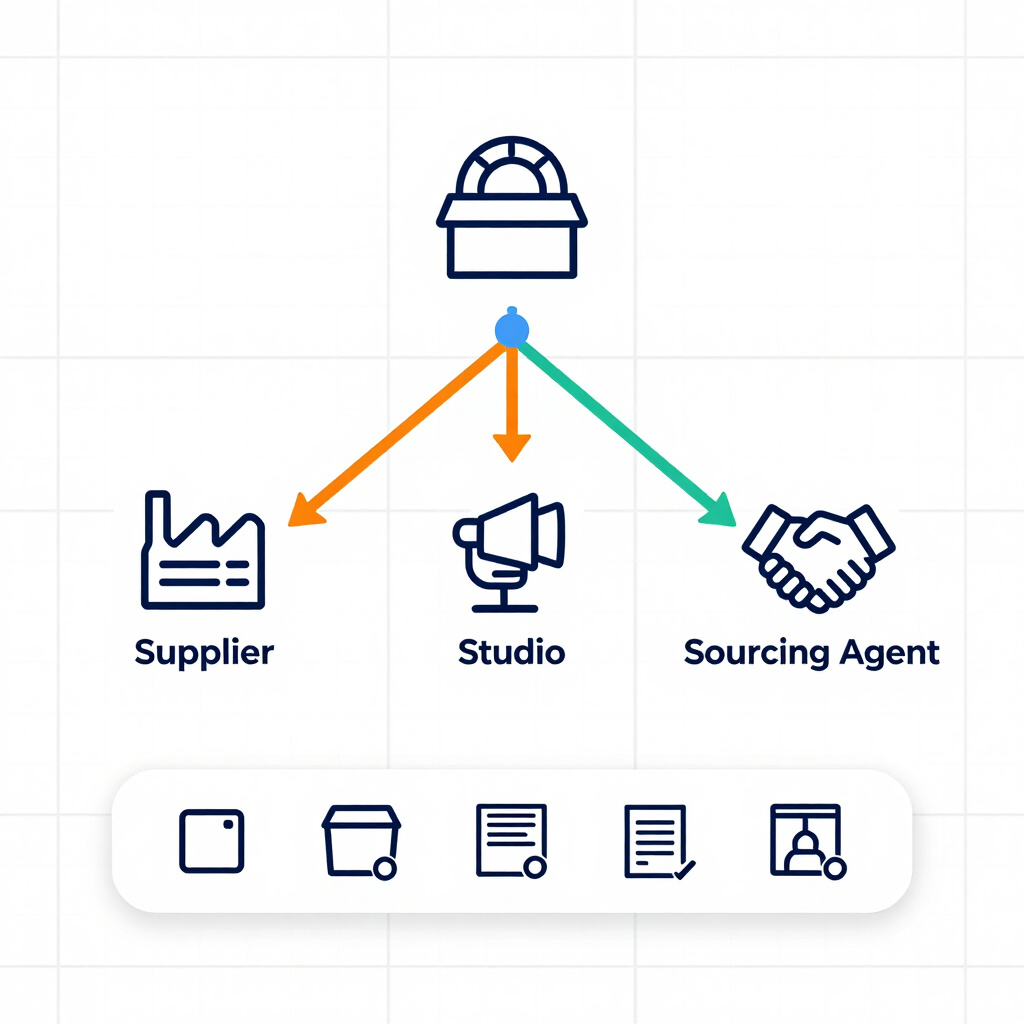
Getting e-commerce-ready product photos for products made in China starts with treating photography as part of your sourcing workflow. You can ask your supplier to arrange images, hire a dedicated studio, or coordinate through a sourcing agent. The right choice depends on your product, volume, timeline, and brand requirements.
Why product photography belongs in your sourcing plan
When you source a product from China, most of your attention goes to unit cost, lead time, quality control, and shipping. Those matter, but they do not sell the product. Your product photos carry the visual burden of the listing: they communicate size, material, finish, color, and use. A good product can look average in bad photos, and an average product can look credible in good ones.
Photography also has a timing problem. If you wait until your finished goods are ready, you are competing with your own launch schedule. Samples, packaging, and final production units all move on different timelines. The earlier you decide how images will be produced, the easier it is to align them with production and delivery.
There is no single correct way to get product photos in China. The market includes factories that offer basic shots, commercial studios that specialize in e-commerce work, and sourcing agents who can fold photography into a broader production program. Your job is to match the approach to your product and your tolerance for coordination risk.
Your options for getting product photos in China
Option 1: ask your supplier or factory to arrange photos
Many factories can produce basic product photos, especially if they already photograph goods for their own catalogs or for other buyers. This option is convenient because the product is already at the factory, and the supplier knows how to handle it. You avoid shipping samples to a separate studio, and the photos can be taken while production is still underway.
The trade-off is control. Factory-arranged photos tend to be functional rather than brand-building. Backgrounds, styling, and retouching may not match your visual identity, and you may not receive the original files or clear usage rights unless you confirm them in advance. For a simple product on a clean background, this can be perfectly adequate. For a brand with strict visual guidelines, it is often not enough.
Option 2: hire a dedicated product photography studio
A dedicated studio gives you more control over lighting, styling, composition, and post-production. This works well when your product needs lifestyle shots, multiple angles, detailed close-ups, or a consistent look across a full catalog. You will typically send product samples to the studio, agree on a shot list, and review proofs before the final images are delivered.
The cost is higher than factory-arranged photos, and you take on the work of finding, briefing, and managing a separate vendor. You also need to factor in sample shipping and the risk that samples arrive late or damaged. If you have a large catalog or a strong brand, the investment is usually justified.
Option 3: coordinate through a sourcing agent
A sourcing agent sits between you and the production process. Instead of managing a factory and a photographer as separate relationships, you can ask the agent to include photography coordination as part of a broader engagement. This works well when you already need production monitoring, final inspection, or product development support, because the agent is on the ground and can align the photography with the production timeline.
What you give up is direct control over the briefing. You are relying on the agent to brief the photographer correctly and to protect your interests in the handoff. A sourcing agent is set up to handle that coordination, but you should still define the deliverables, usage rights, and review process in writing.
Here is a hypothetical example to make the trade-offs concrete: a startup sourcing a small batch of consumer goods might prefer supplier-arranged photos for speed and low cost, while a brand with strict visual guidelines might invest in a dedicated studio to keep every listing on-brand. Neither choice is wrong; they just reflect different priorities.
What to prepare before the shoot
The quality of your product photos depends less on the photographer’s equipment than on how well you brief them. A photographer can only shoot what is in front of them. If you send the wrong samples, forget the packaging, or skip the brand guidelines, the images will miss the mark and you will pay for reshoots or retouching.
Work through this checklist before the session:
- Final or representative product samples. Send the actual product in every color and variant you plan to list. If the final version is not ready, send the closest available sample and flag the differences so the photographer knows what to expect.
- Packaging and labels. If packaging should appear in the images, send it. Packaging changes the way a product reads in a photo, and shooting without it means a second session later.
- Brand guidelines. Provide logo usage rules, colors, fonts, and examples of the visual style you want. The more specific you are, the less the photographer has to guess.
- A shot list. Write down the angles, compositions, and photo types you need: product-only, lifestyle, 360-degree, detail close-ups, or scale shots. A written list prevents misunderstandings and makes it easier to check the final deliverables.
- Reference images. Pull examples from your own past listings or from competitors whose look you admire. Reference images communicate intent faster than a paragraph of description.
- Props, backgrounds, and styling elements. If your brand uses a particular surface, color, or prop style, send those items or agree on them with the photographer in advance.
One operational detail worth noting: label every sample clearly. If you send five similar products in different colors, the photographer needs to know which is which. A simple list with product names, SKUs, and any special instructions will save you from receiving images of the wrong variant.
Questions to ask before booking a photographer
Photography quotes in China can look simple on the surface, but the scope behind them varies widely. The same price can include or exclude retouching, props, travel, rush work, and file delivery. Before you commit, get answers to these questions in writing:
- What is included in the quoted price, and what costs extra? Ask specifically about retouching, props, backgrounds, travel, and rush work. A low base price can become expensive once add-ons appear.
- What is the expected turnaround time? Confirm whether the timeline starts when samples arrive or when the shoot begins, and how it fits with your production and launch schedule.
- How many revisions are included? Find out what happens if the images do not meet the brief. One round of minor adjustments is common, but major reshoots should be defined in advance.
- Will you receive the original files, edited files, or both? Confirm the formats and resolutions. Raw files are useful for future editing, but they are large and may not be what you need for a listing.
- Who owns the image rights? Clarify whether you can use the photos on your website, marketplaces, social media, and advertising, and whether the photographer can use them in their portfolio.
- Can the photographer confirm the image specifications required by your target platform? Dimensions, file format, background, and file size matter. If the photographer cannot confirm them, you will need to verify the requirements yourself before the shoot.
Put the agreed scope, timeline, deliverables, and usage rights into a written agreement. A one-page document is enough. The point is not to create legal friction; it is to make sure both sides are working from the same definition of done.
How a sourcing agent can coordinate product photography
If you are already working with a sourcing agent for production, photography coordination can be added to the same workflow. Yes Supplier offers requirement confirmation, supplier search and vetting, sample coordination, production monitoring, final inspection, product development support, and logistics coordination. Photography coordination can be discussed as part of production monitoring or product development support, so images are ready when your goods are.
The practical value of this approach is that you reduce the number of vendors you manage. Instead of coordinating a factory, a photographer, and a shipping agent yourself, you have one point of contact who understands the production timeline and can make sure the photography does not delay your launch. The agent can also help confirm requirements, such as which samples to send and what the final images need to show.
Here is a hypothetical example: a small business sourcing a new product line could ask Yes Supplier to include photography coordination during the production-monitoring phase, so listing images are available shortly after the finished goods are ready. The agent would confirm the photography brief, align the shoot with the production schedule, and handle the handoff of samples and final files. No specific outcome is guaranteed, but the coordination burden is reduced.
If you are unfamiliar with how a sourcing engagement is structured, it is worth reading how Yes Supplier works before you start the conversation. The more clearly you can describe your product, timeline, and image requirements, the easier it is for an agent to tell you whether photography coordination fits your program.
Frequently asked questions
Can my supplier or factory take product photos for me?
A supplier may be able to arrange basic photos, but quality and consistency can vary. Confirm the scope in advance: which angles, how many images, whether retouching is included, and who owns the rights. If you only need clean product shots on a white background, this option can work well. If you need lifestyle images or strict brand consistency, a dedicated photographer is usually a better fit.
What is the difference between product-only, lifestyle, and 360-degree photos?
Product-only images show the item on a clean background with no context. Lifestyle images show the product in use, which helps buyers understand scale and application. 360-degree images let buyers rotate the product to view it from every angle. Each type serves a different purpose, and your shot list should say which ones you need.
What image specifications should I confirm?
Confirm dimensions, file format, background, and file size with your target platform or photographer before the shoot. Platform requirements can change, so verify them against official documentation rather than assuming an old specification still applies.
How do I ensure photos match my brand?
Provide brand guidelines, reference images, and a shot list before the session. The more visual direction you give, the less the photographer has to interpret. Review proofs carefully and ask for adjustments while they are still cheap to make.
How can a sourcing agent help?
A sourcing agent can coordinate photography alongside production monitoring or product development support, which means you do not have to manage the photographer as a separate vendor. The agent can align the shoot with production, confirm the brief, and handle the handoff of samples and files. For other sourcing questions, the FAQs page is a useful starting point.
Before you book a photographer, decide which of the three routes fits your product, prepare the samples and shot list, and confirm pricing, timeline, revisions, file delivery, and image rights in writing. If you want photography coordinated as part of your China sourcing, discuss it with Yes Supplier during requirement confirmation or production monitoring. The Yes Supplier services page lists the coordination services, and you can discuss whether photography coordination fits your program. You can also explore the case studies, learn more about Yes Supplier, or browse related resources while you plan your next step.