
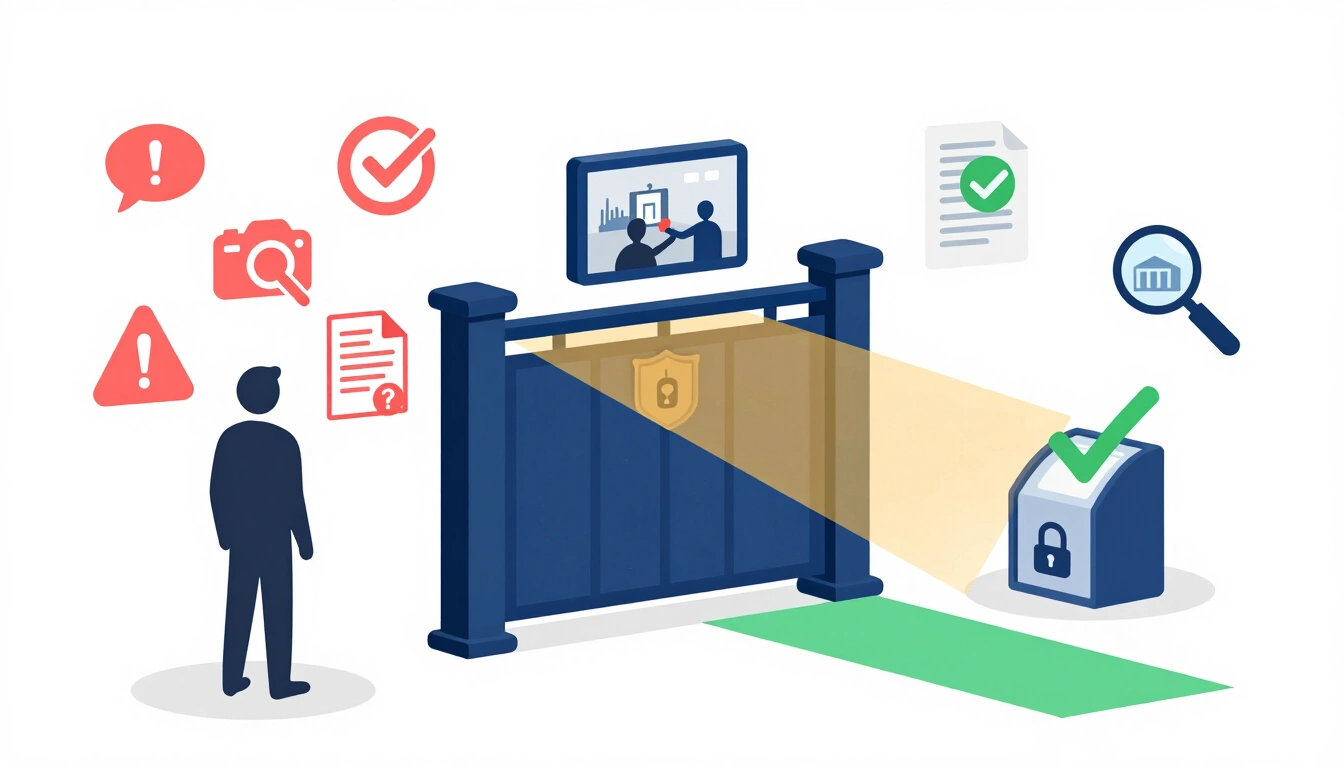
Every sourcing conversation reaches the same moment. The quote looks competitive, the factory video looks convincing, and an agent in another time zone is asking you to move money now to reserve a production slot. That moment is where a legitimate relationship begins or a scam ends.
Fake sourcing agents do not always look fake. They speak fluent English, respond quickly, and send polished photos. Their target is not only the careless buyer; it is any buyer who has spent time chasing quotes and finally believes they have found a reliable partner. The good news is that the fraud follows a pattern. Once you know the pattern, you can check it before you pay.
1. How the Fake Agent Scam Works
The typical fake agent scam begins with an approach: an unsolicited email, a LinkedIn message, or a referral from someone you barely know. The agent moves the conversation to WeChat or WhatsApp almost immediately and starts behaving like an old friend. They quote a low price, promise fast delivery, and claim to have a factory relationship that other agents cannot match.
Then the pressure starts. You are told the factory is about to enter peak season, or the price will rise after an upcoming holiday, or another buyer is about to take the production slot. The agent asks for payment through Western Union, a money transfer app, cryptocurrency, or a personal bank account. If you pay, either the agent disappears or the slow-burn version begins: every step requires another payment, and the excuses multiply until the money is gone.
Understanding the lifecycle matters because it turns vague fear into a checklist. A real agent can have a delayed sample or a difficult factory conversation. A fake agent will block your attempts to verify anything.
2. Red Flag 1: The Agent Controls All Factory Communication
A genuine sourcing agent works as an intermediary, not as a wall. If an agent insists that every conversation go through them, refuses to share a direct factory phone number, or stalls when you ask for a video call with the production manager, treat it as a serious warning.
Try this test. Ask for a short video call with the factory manager at a specific time and ask the manager to hold up a whiteboard with the current date and your product name. A legitimate agent will set it up because they have nothing to hide. A fake agent will deflect, change the subject, or offer a “manager” who sounds exactly like the person you have been chatting with.
Some buyers worry that asking for direct contact will offend the agent. It will not. The best agents actively encourage verification because it protects both sides. If the relationship cannot survive a basic video call, it should not survive your deposit.
3. Red Flag 2: They Push for Off-Platform Payments and Urgency
Urgency is the fuel of this scam. A fake agent will claim that a special price is about to expire, that the factory needs an immediate deposit, or that someone else is about to take your slot. Real agents may have deadlines, but they do not pressure a new buyer into bypassing basic payment controls.
The payment channel tells you more than any business card. Be suspicious of Western Union, MoneyGram, cryptocurrency, or transfers to a personal bank account in a third country. Consumer protection agencies repeatedly warn that these methods are nearly impossible to reverse. A legitimate agent has a registered business account, accepts structured payments, and can explain the payment terms in writing.
If an agent offers a “discount” for paying everything upfront through an untraceable channel, you already know the answer. Walk away.
4. Red Flag 3: They Can’t or Won’t Show Physical Proof
Stock photos are cheap. A real factory has a production floor, machinery, and people who know what they are making. When you ask for proof, a genuine agent can provide a live video walkthrough with the date and location visible, a photo of the factory sign with your agent standing in front, or a quick clip of your product being assembled.
Fake agents send generic videos of machinery, photos without a date stamp, or “tours” that never materialize. Ask for proof tied to this specific transaction: the agent walking through the factory today, the weather report playing on a TV in the background, or a whiteboard showing the current date. If they cannot do that, they are not where they say they are.
5. Red Flag 4: Contract, Incoterms, and Legal Evasions
A formal contract is not bureaucratic friction. It is the only document that defines what you are paying for, what quality standard you expect, and what happens when something goes wrong. Fake agents resist contracts because documents leave evidence.
Before you sign anything, ask for the company’s business license, Chinese legal entity name, physical address, and registration number. A reputable agent will provide these without hesitation. The contract should cover the scope of services, fee structure, Incoterms, inspection requirements, confidentiality, and IP protection. If the agent deflects with a phrase like “that is just standard” and cannot explain the terms, stop the conversation.
6. Red Flag 5: They Claim They Are the Factory
Some scam agents go one step further and claim to be the manufacturer. In reality, they are a trading company or a middleman with no production line. The line between a factory and a trading company is not always a problem—many honest trading companies add value—but a false claim is a serious problem.
If an agent says they are the factory, ask for the exact Chinese business license, the registered legal entity name in Chinese, and the factory address. Then ask for a live video walkthrough of the specific production line that will make your product, not a generic assembly line. Exporters need these documents anyway, so a real factory can provide them quickly. Official trade promotion agencies publish guidance on how to verify overseas partners, and independent inspection firms can confirm whether the factory exists before you spend on tooling or samples.
7. Legitimate Agent vs. Fake Agent: A Side-by-Side Check
Use this comparison before you sign an agreement or pay a deposit. If you see the left column, slow down.
| Red Flag | What the Scammer Does | What a Legitimate Agent Does |
|---|---|---|
| Controls factory communication | Blocks direct contact, gives only WeChat or WhatsApp numbers | Introduces you via video call or shares factory contact for verification |
| Payment terms | Demands full payment via Western Union, crypto, or personal bank account | Uses a verified business account, escrow, or structured milestone payments |
| Physical proof | Sends stock photos or videos from other factories | Provides real-time video walkthrough with a date and location stamp |
| Contract behavior | Refuses written contract or disputes standard Incoterms | Signs a clear contract with defined Incoterms and inspection clauses |
8. A Practical Verification Checklist for Buyers
Print this list and run through it in order. A legitimate agent will welcome the process.
- Check the business license. Ask for a copy of the Chinese business license and verify the legal entity with an official registry or a third-party verification service.
- Confirm the physical address. Ask for the address in Chinese characters and look it up on map tools. A residential address is a red flag.
- Match the bank account to the company name. The beneficiary must be the legal entity you are contracting with. If a personal name appears, stop.
- Do a live video walkthrough. Ask the agent to walk through the office or production floor and show where your product would be made.
- Run an independent check. Have a China-based inspection company verify the factory and, if necessary, attend a pre-production meeting.
9. What to Do If You Already Paid a Suspected Scam Agent
Start by gathering the evidence: payment records, bank confirmations, chat logs, contracts, and the agent’s claimed business license or lack of one. Then contact your bank as quickly as possible to ask whether the transfer can be reversed or stopped. Payment apps and wire transfers may have limited protection, but some disputes are still worth filing.
Report the fraud to the relevant authorities in your country and, if the entity claims to be in China, to the local online fraud reporting channel. Do not expect an immediate recovery, especially if you sent money through an unregulated channel. But a documented complaint can alert other buyers and may support law enforcement action.
Finally, use the loss as a verification lesson. The next time an agent asks for a deposit, run the checklist before you transfer anything.
The difference between a scammer and a professional sourcing partner is not always visible in the first email. It becomes visible the moment you ask to verify. If an agent refuses to share a business license, introduce you to the factory, or accept a structured payment arrangement, they are telling you who they are. Listen.
When you are ready to work with a partner that makes verification part of the process, see how Yes Supplier’s services page covers supplier search, factory vetting, sample coordination, production monitoring, and logistics coordination.