
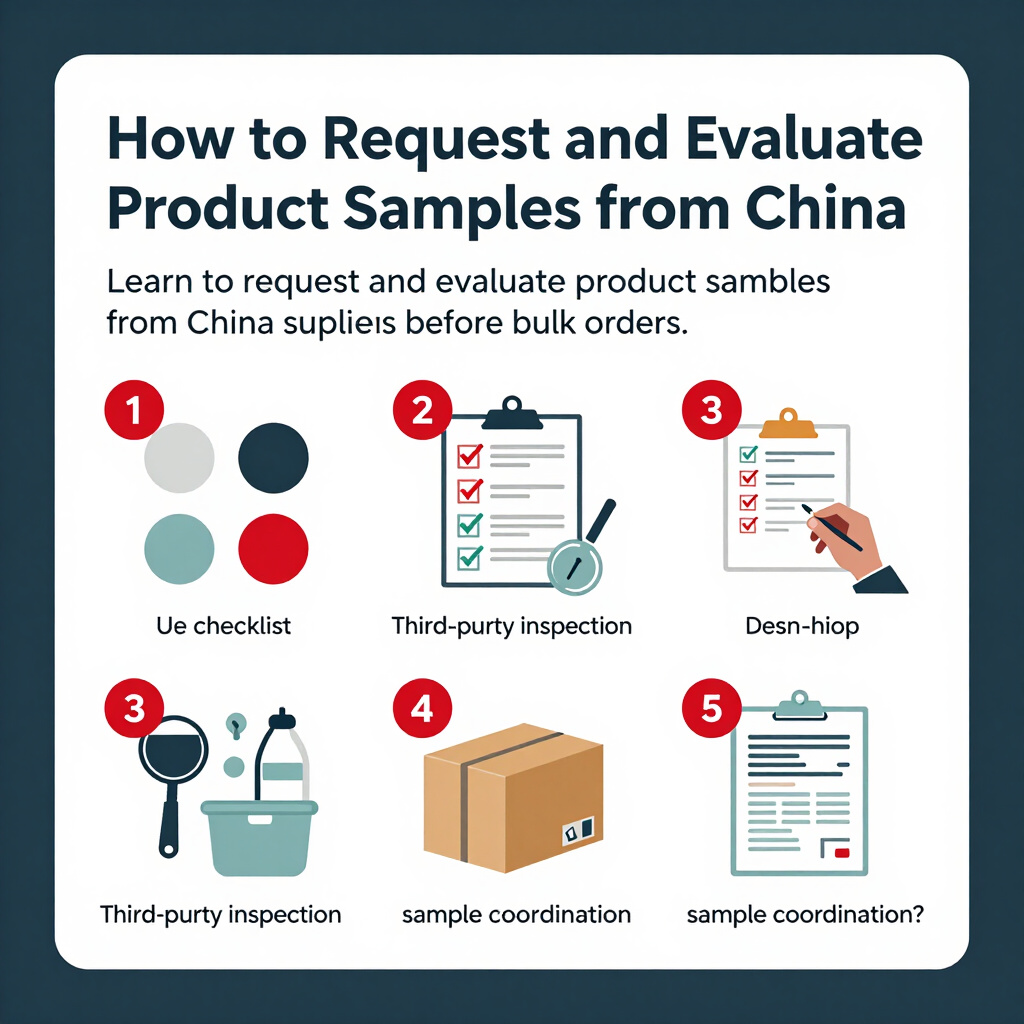
You have found a supplier in China with a competitive quote, but you have never held the product in your hands. A sample is the only practical way to verify that what the supplier describes matches what you will actually receive in a bulk order. Request one before you commit to production, and evaluate it against requirements you define before you contact the supplier.
Start with your requirements, not with the supplier. The clearer your specification sheet, the more useful the sample will be. When the sample arrives, compare it against that sheet, document what you find, and make a decision based on evidence. If you lack the technical expertise to evaluate the sample yourself, third-party inspection is an option worth considering. Yes Supplier offers sample coordination as part of its sourcing services if you want managed support through the process.
1. What to prepare before requesting a sample
The quality of the sample you receive depends heavily on the quality of the requirements you send. A supplier can only build to the specification you provide, so vague instructions produce vague results.
Start by writing down your product specifications. Include materials, dimensions, colors, finishes, packaging, labeling, and any performance requirements. Be specific about tolerances. If a dimension must stay within a certain range, say so. If a color must match a reference, provide the reference. If packaging must survive a drop test, describe the test.
Next, define your testing criteria and acceptance thresholds. What does the sample need to do, and how will you know it does it? For an electronic product, that might mean a functional test, a battery life check, and a charging test. For a garment, it might mean checking seam strength, fabric weight, and colorfastness. Write these criteria down before you contact any supplier.
Prepare a written requirement sheet that you can send to the supplier. This document should include your specifications, testing criteria, quantities, and any questions you need answered. A written sheet reduces misunderstandings and gives you a reference point when the sample arrives.
Finally, decide what the sample is for. A pre-production sample that must match the final bulk product is different from a marketing sample used only for photos. Tell the supplier which type you need, and confirm how closely the sample must match the final product.
2. How to request a sample from a China supplier
When you are ready to request a sample, send the supplier your written requirement document and ask three questions up front: Is a sample available? What does it cost? How long will it take? Sample costs and timelines vary by product, supplier, and shipping method, so ask for a quote and an estimated schedule rather than assuming a standard.
Confirm what happens after you approve the sample. Does the price include revisions if the first sample does not meet your requirements? If you request changes, will the supplier produce a revised sample at an additional cost? Getting these terms in writing before you place the sample order prevents surprises later.
Keep a record of all communication with the supplier. Save the requirement sheet, the supplier’s confirmation, the sample order details, and any changes you request. This record becomes your reference when you evaluate the sample and when you move to bulk production.
If you are working with a sourcing partner, sample coordination can handle this communication and follow-up for you. Yes Supplier offers sample coordination as part of its sourcing services, so someone manages the back-and-forth with the supplier and keeps the process moving. You can see how the managed process works on the how it works page.
3. What to evaluate when the sample arrives
When the sample arrives, do not judge it by eye alone. Compare it systematically against your written requirement sheet.
Start with the physical checks. Measure dimensions and compare them to your specifications. Check materials against what you specified. Examine workmanship: seams, joints, finishes, edges, and any detail that affects quality. Test the function according to your testing criteria. Check packaging and labeling against your requirements.
Document everything. Take photos from multiple angles, record measurements, and note any discrepancies. If something does not match, write down exactly what is wrong. This documentation gives you evidence for your decision and gives the supplier a clear reference if you request a revised sample.
4. Sample evaluation checklist and decision table
Use this checklist to work through your evaluation systematically:
- Dimensions: measure and compare against your specification sheet.
- Materials: verify the sample uses the materials you specified.
- Workmanship: inspect seams, joints, edges, and finishes.
- Function: run the sample through your testing criteria.
- Packaging: check materials, dimensions, and protective qualities.
- Labeling: verify text, placement, and any required information.
After you complete the checklist, use the decision table to categorize the sample:
| If the sample… | Your decision | Action |
|---|---|---|
| Meets all requirements and testing criteria | Approve | Proceed to bulk production with the approved sample as the reference. |
| Is close but has fixable issues | Request revision | Send specific changes to the supplier and ask for a revised sample. |
| Has fundamental issues that cannot be resolved | Reject | Continue your supplier search using the evaluation notes as criteria. |
Hypothetical example: A buyer sourcing a stainless steel water bottle specified a 500 ml capacity, a double-wall vacuum construction, and a leak-proof lid. When the sample arrived, the capacity measured correctly, but the lid leaked during a fill-and-invert test. The buyer documented the leak with photos, sent the requirement sheet and test notes back to the supplier, and requested a revised sample with a new lid design. The supplier agreed to produce a revised sample at no additional cost. The buyer’s decision was “request revision,” not “approve,” because the leak failed the testing criteria.
5. Using third-party inspection for sample evaluation
If you lack the technical expertise to evaluate a sample yourself, consider using a third-party inspection service. An independent inspector can check the sample against your requirements and provide an objective report.
Third-party inspection is an option to reduce risk, not a guarantee of zero defects. The inspector’s value comes from expertise and independence: they know what to look for, and they have no stake in whether you approve the sample. If you are sourcing a product category you do not know well, the cost of an inspection can be worth the confidence it provides.
Yes Supplier’s sample coordination can help you manage the evaluation process.
6. Decision: approve, revise, or reject the sample
Your decision should be based on evidence from your evaluation, not on how the supplier’s quote compares to your budget.
Approve the sample only if it meets all your requirements and testing criteria. If you approve with known issues, those issues will likely carry into bulk production, and fixing them later is more expensive than fixing them now.
If the sample is close but not right, specify the changes you need and request a revised sample. Be precise: reference the requirement sheet, describe the discrepancy, and state what acceptable looks like. A revised sample costs time, but it is cheaper than discovering the problem in a bulk shipment.
Reject the sample if fundamental issues cannot be resolved. This might mean the supplier cannot meet your quality bar, or the product as made does not match what you need. Rejection is a signal to continue your supplier search, not a failure.
Document your decision and the follow-up actions before moving to bulk production. If you approve, record the approved sample’s characteristics so the factory has a reference. If you request a revision, record the changes. If you reject, record why, so you can apply the same criteria to the next supplier.
7. Frequently asked questions
How much do samples cost, and how long do they take?
Sample costs and timelines vary by product, supplier, and shipping method. Ask the supplier for a quote and an estimated schedule before placing the sample order. Ask whether sample costs will be credited against a bulk order, and confirm the terms in writing.
Should I use a third-party inspection service for samples?
Consider it if you lack the technical expertise to evaluate the sample yourself. An independent inspector can verify quality and specifications against your requirements. It is a risk-reduction option, not a guarantee.
What if the sample does not match my requirements?
Request a revised sample with specific changes, or reject the sample and continue your supplier search. Base your decision on whether the issues are fixable and whether the supplier can address them.
What regulations apply to importing samples?
Check with the relevant authorities in your country for current import requirements. For more common questions, see the FAQs.
8. How Yes Supplier can help with sample coordination
Yes Supplier offers sample coordination as part of its sourcing services. The company also provides requirement confirmation, supplier search and vetting, production monitoring, final inspection, product development support, and logistics coordination. You can review case studies, read about Yes Supplier, or browse additional resources to understand how the team works.
If you are sourcing from China and want help managing the sample process, discuss your product requirements with Yes Supplier. The how it works page explains the managed process from requirement confirmation through logistics coordination.